
The Question Every Store Owner Needs to Answer Honestly
Here is a question worth sitting with for a moment: when a genuinely transformative shift arrives in your industry, are you the person who moves first - or the one who waits to see how it plays out for someone else?
Most people, if they are being honest, will say follower. And most people will dress it up as prudence, or due diligence, or "waiting for the technology to mature." But there is a version of that instinct that is not caution at all. It is fear. And in ecommerce right now, that fear has a very real price tag attached to it.
The AI wave is not coming. It is already here. The stores choosing how to ride it - and the stores choosing to wait on the shore - are making a decision that will shape the next three to five years of their business. Whether they realise it or not.
Leaders Write the Rules. Followers Inherit Them.
There is a pattern that repeats itself across every major shift in commerce. A small group of operators moves early, figures out what works, and builds an advantage that becomes structurally very hard for later entrants to close. Then a larger wave of followers arrives - often doing the right thing, just too late to capture the same returns.
We saw it with mobile-first design. We saw it with email automation. We saw it with social commerce. And right now, we are watching it unfold again with AI shopping assistant for ecommerce.
The stores that adopted conversational commerce AI early are not just getting incremental improvements. According to McKinsey, AI-driven personalisation can lift revenue by 10-15% for retailers who implement it effectively. That gap between early movers and late adopters does not close - it compounds.
So the question is not really "should I add AI to my store?" The question is "how much ground am I willing to give up before I do?"
What Actually Separates Leaders From Followers in Ecommerce
It Is Not About Budget
One of the most persistent myths in this space is that AI adoption is a large-business advantage. That the enterprise players get access to the good tools first, and independent stores have to wait for the trickle-down. That narrative is outdated. Ecommerce conversion optimization AI is genuinely accessible to stores of all sizes today - and in many cases, the smaller, more agile operator has an advantage the big players do not: the ability to move fast without a committee sign-off.
It Is Not About Being a Tech Person
The leaders I see winning right now are not necessarily the most technically sophisticated operators. They are the ones who are obsessively focused on the customer experience - and who are willing to adopt tools that make that experience dramatically better. An AI personal shopper for websites is not a technical project. It is a customer experience decision. The implementation handles itself. The strategic intent is what matters.
It Is About Identity
Ultimately, the difference between a leader and a follower in business is not intelligence, or resources, or even timing. It is identity. Leaders see themselves as the ones who shape what comes next. Followers see themselves as respondents to what others have already decided. Both are valid operating modes - but only one of them builds durable competitive advantage in a fast-moving market.
If you see yourself as someone who shapes the customer experience rather than simply reacting to it, then the question of whether to invest in personalized shopping experience AI is not a hard one. It is the obvious next move.
The Real Cost of Waiting
Here is what the "wait and see" position actually looks like in practice. Every month that passes without an intelligent shopping assistant on your store is a month where your shoppers are arriving, feeling confused or unsupported, and leaving - often without telling you why. According to the Baymard Institute, the average ecommerce cart abandonment rate sits at nearly 70%. A significant proportion of that abandonment happens not at checkout, but far earlier - at the moment a shopper cannot find what they need or cannot get a question answered.
That is not a checkout problem. It is a guidance problem. And it is one that increase ecommerce conversion rates with AI solutions are specifically built to solve.
The stores waiting for AI to "settle down" before they adopt it are not protecting themselves from risk. They are creating a different kind of risk - the risk of being structurally behind when the window to catch up closes.
We have written before about whether being a fast follower is enough - and the honest answer is that in this particular moment, the fast follower position is shrinking fast. The gap between pioneers and followers is growing, not narrowing.
What Leaders Are Actually Doing Right Now
The store owners who are pulling ahead are not doing anything exotic. They are making a handful of deliberate decisions that compound over time.
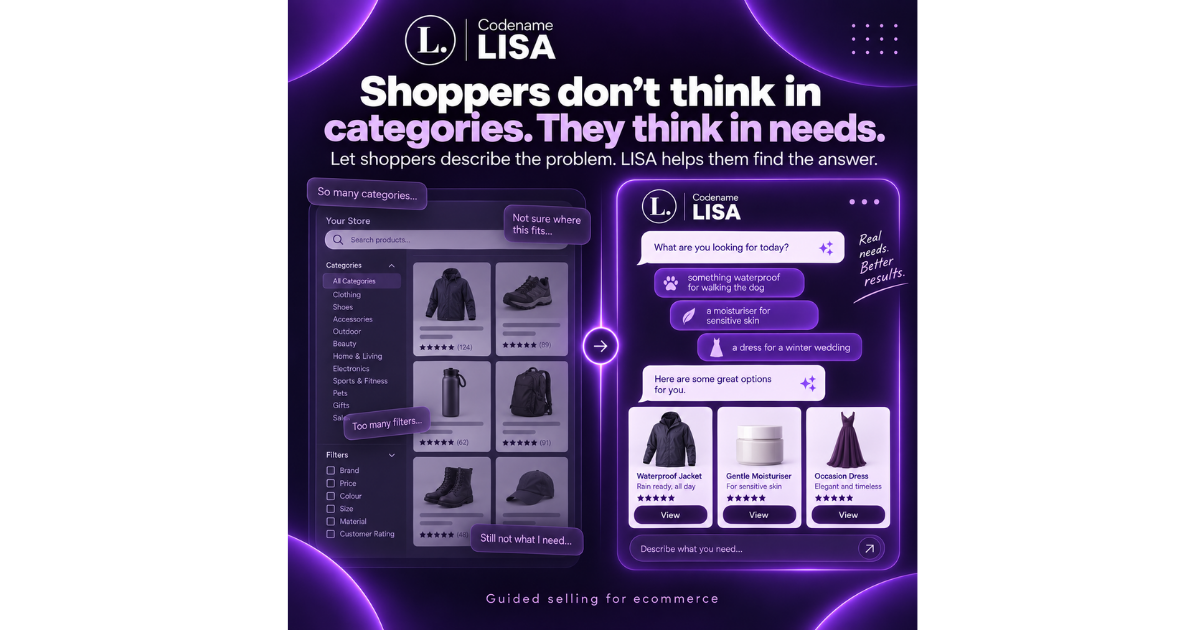
They are adding conversational commerce AI to their stores so that every shopper gets a personalised, guided experience - not a static product grid and a search bar that requires them to already know what they want.
They are using the data those interactions generate to understand what their shoppers are actually asking, struggling with, and looking for. Your shoppers are telling you exactly what to fix - if you have a way to listen.
They are treating conversion optimisation not as a one-time project but as a continuous, AI-driven process that improves with every interaction.
And they are doing this now - not waiting for a consensus to form, not waiting for a competitor to prove the model, and not waiting for the technology to become so obvious that adopting it feels safe rather than brave.
Which Side of This Do You Want to Be On?
There is no neutral position here. Every day your store operates without intelligent, personalised guidance for your shoppers is a day where the gap between your store and the leaders in your category either stays the same or grows. It does not shrink on its own.
The wave is forming. Some stores are positioning themselves to ride it. Others are still debating whether it is real.
Waiting for AI to settle is itself a strategy - just not a winning one. The stores that will look back on this period as a turning point are the ones making the decision to move now, not the ones who waited until the decision was made for them.
LISA is an AI shopping assistant built specifically for ecommerce stores that want to lead - not follow. By delivering genuinely personalised guidance to every shopper, LISA helps stores convert more visitors, recover more revenue, and build the kind of customer experience that compounds over time. If you want to see what LISA can do on your store, book a demo and we will show you exactly how it works in practice.