
Black Friday Shoppers Don't Queue. They Just Leave.
There's a fundamental difference between a frustrated shopper in a physical store and a frustrated shopper on your website. The person in the store is already there - they'll wait, grumble, and eventually buy. The person on your site? They're one unanswered question away from closing the tab and buying from someone else.
This is the defining challenge of Black Friday for ecommerce. The traffic spikes are real, the opportunity is enormous, and yet most stores bleed sales during the period they've worked hardest to capitalise on. Not because their products are wrong, or their prices are off - but because the experience breaks down under pressure.
If reducing cart abandonment during peak season is a priority for your store (and it absolutely should be), the answer isn't more discount codes. It's better support infrastructure - and smarter automation.
Why Black Friday Specifically Breaks Customer Support
During a typical week, your support team handles a manageable volume of questions. But Black Friday compresses that volume dramatically. Suddenly, thousands of shoppers are asking variations of the same five questions - simultaneously - at the exact moment your team is already stretched thin.
The questions themselves aren't complicated. "Will this arrive in time?" "Why isn't my code working?" "I added it to my cart but now it's gone?" These are answerable. But if the answers aren't immediately available at the precise moment a shopper needs them, that shopper disappears. According to Baymard Institute, the average ecommerce cart abandonment rate sits at nearly 70% - and friction during the decision-making phase is a leading cause.
The cost of that friction compounds fast. A single abandoned cart during Black Friday isn't just one lost sale - it's a shopper who may not return, and whose trust in your brand has taken a hit they'll remember.
The Four Questions That Kill Black Friday Conversions
Before you can fix the problem, you need to know exactly where the pressure points are. In our experience working with ecommerce stores through peak trading periods, four question categories cause the most damage to conversion rates:
1. Shipping Uncertainty
"Will this actually arrive in time?" is the question behind a huge proportion of Black Friday hesitation. Shoppers are often buying gifts, and uncertainty about delivery windows is enough to make them pause - or abandon entirely. Being explicit and proactive about shipping cut-offs, carrier delays, and realistic timelines isn't just good customer service. It's conversion strategy.
2. Discount Code Confusion
Few things frustrate a motivated buyer faster than a promo code that won't apply. Whether it's excluded items, stacking conflicts, or a code that simply isn't working, the experience of reaching checkout with an expectation that isn't met is a conversion killer. Clarity at the point of sale - not buried in terms and conditions - is essential.
3. Stock and Cart Dynamics
Shoppers assume that adding something to their cart reserves it. When they return to checkout and find it gone, the emotional response is surprisingly intense - even if the logical explanation is simple. A small, visible note in the cart explaining that items aren't held until purchase isn't just honest - it drives urgency and reduces post-purchase complaints.
4. Order Change Requests
During peak fulfilment, the window for changes is tight. Shoppers who've entered a wrong address or selected the wrong variant will expect flexibility that your operations simply can't support at speed. Setting expectations early - on the order confirmation screen, not buried in a confirmation email - saves both customer frustration and support team time.
Automation Isn't a Shortcut - It's a Strategy
Here's where many store owners get this wrong. They see automation as a way to handle volume cheaply - a cost-saving measure rather than a sales-protecting one. But the right automated customer service for online stores isn't just about deflecting tickets. It's about answering the right question at the right moment, so the shopper keeps moving toward purchase rather than away from it.
Proactive chat triggers on high-intent pages - checkout, cart, product pages with limited stock - can intercept the moment of hesitation before it becomes abandonment. A well-timed, relevant message that addresses the shopper's likely concern without them having to ask is far more effective than a reactive support queue.
This is precisely the gap that an AI shopping assistant for ecommerce fills. Rather than waiting for a shopper to submit a support ticket (which they almost never will - they'll just leave), a conversational AI can surface relevant answers proactively, guide shoppers through uncertainty, and keep the path to purchase clear.
As we explored in our piece on why checkout optimisation alone won't save you, the real conversion battle is won or lost before the checkout page. Black Friday just makes that truth harder to ignore.
What Good Preparation Actually Looks Like
The stores that handle Black Friday well don't improvise. They treat the period like a product launch - with specific preparation for the specific questions they know are coming.
That means updating shipping information at the point it matters most - in the checkout flow, not just on a FAQ page. It means testing discount logic before the sale goes live, not troubleshooting it while thousands of shoppers are frustrated. It means making stock messaging visible in the cart, not just on product pages. And it means having clear, pre-written responses ready for every scenario your team will encounter.
But even the best-prepared human team has limits. Volume, speed, and the expectation of instant answers are realities of Black Friday that manual support simply cannot meet consistently. That's where intelligent automation becomes the difference between a record-breaking day and a support queue disaster.
If you're thinking about your broader readiness for the season, our Black Friday AI readiness checklist is worth working through before the pressure hits.
The Shopper Experience Is the Conversion Rate
It's tempting to treat customer support and conversion optimisation as separate disciplines. But during Black Friday, they collapse into the same thing. A shopper who can't get an immediate answer to a shipping question doesn't convert. A shopper who hits a confusing discount error doesn't convert. A shopper who loses an item from their cart and doesn't understand why doesn't convert.
Every point of confusion, every unanswered question, every moment of friction is a shopping cart abandonment event. The stores that recognise this - and build their peak season infrastructure accordingly - consistently outperform those that treat support as a cost centre rather than a revenue function.
As we've written before on what happens when support teams get overwhelmed, the problem isn't just operational. It's commercial. Every unanswered question during Black Friday is a sale that didn't happen.
LISA Helps Your Store Stay Ahead of the Surge
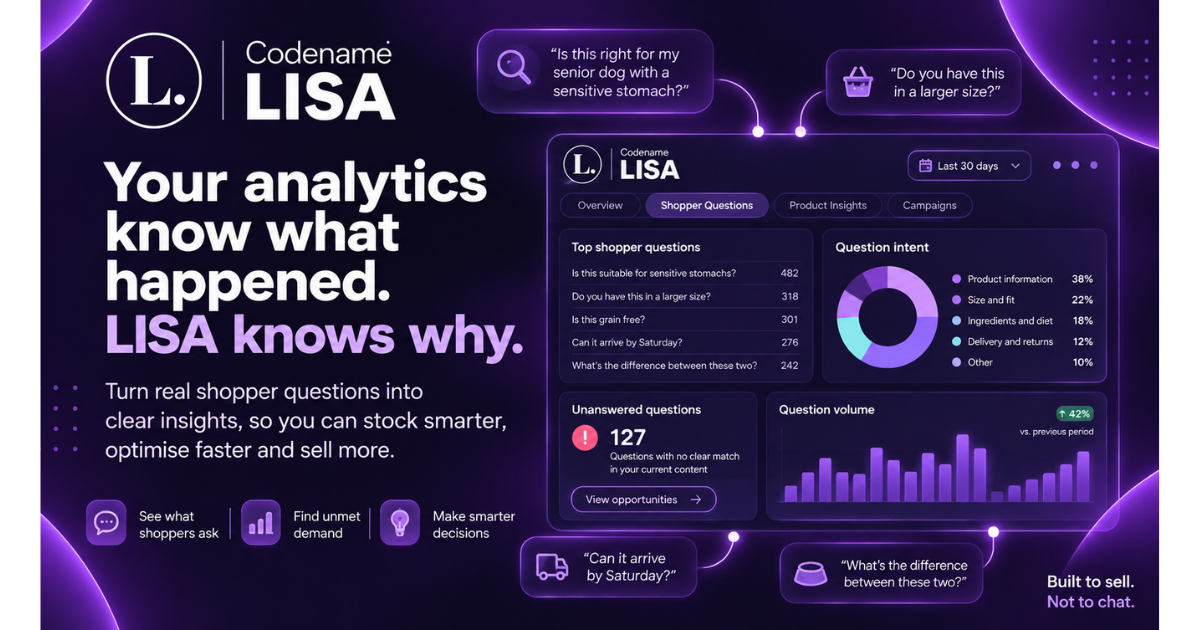
LISA is an AI shopping assistant for ecommerce that works proactively - engaging shoppers at the moments they're most likely to hesitate, answering questions before they become abandonment events, and guiding buyers confidently through to purchase. During high-traffic periods like Black Friday, that proactive layer is what separates stores that convert from stores that cope.
If you want to see exactly how LISA would work on your store - including how it handles peak trading scenarios - book a demo and we'll walk you through it with your specific store in mind.