
The Optimisation Obsession That's Fixing the Wrong Problem
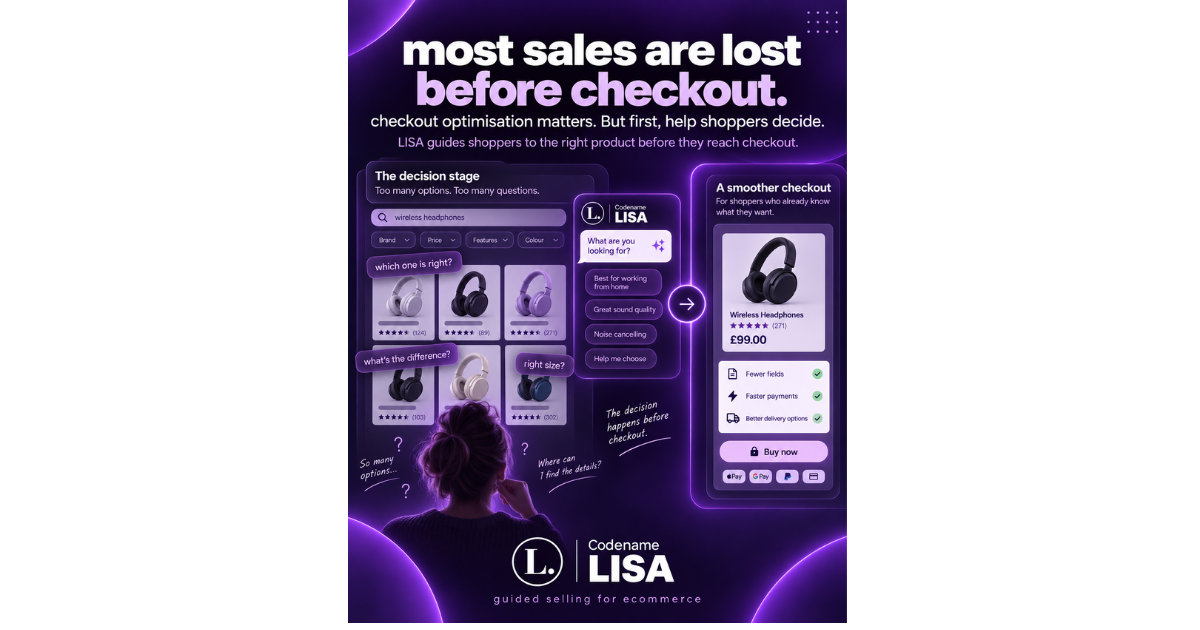
Ecommerce store owners are spending enormous energy - and budget - on checkout optimisation. Fewer form fields. Faster payment gateways. More delivery choices at the final step. And yes, all of that matters. A clunky checkout absolutely costs you sales.
But here's the uncomfortable truth most conversion advice refuses to say out loud: by the time a shopper reaches your checkout, the hard work is already done. That person has decided to buy. Checkout optimisation is just making sure you don't drop the ball at the finish line.
The far bigger problem - the one draining real revenue from your store every single day - happens much earlier. It happens on your product pages, in your search results, and in the quiet moment when a shopper can't find the answer they need and simply leaves.
Where Shoppers Actually Decide to Buy (Or Not)
Think about what a shopper actually experiences before they ever tap "Add to Cart." They land on a category page. They run a search. They click into a product. They read a description that might answer their question - or might not. They wonder whether this product works for their specific situation. They look for reassurance that they're making the right choice.
That entire journey is where purchase decisions are made. And for most ecommerce stores, it's almost entirely unassisted.
According to research cited by the Baymard Institute, the average ecommerce site has a cart abandonment rate of nearly 70%. But cart abandonment is just one metric. What it doesn't capture is the shopper who never even added the item - because they couldn't work out which variant was right for them, or whether the product suited their needs, or because a single unanswered question tipped them toward closing the tab.
Those shoppers never show up in your cart abandonment data. They just vanish.
The Three Moments You're Quietly Losing Sales
1. When Search Returns Too Much (Or Too Little)
Traditional search bars are binary - they match keywords to product names and descriptions. But shoppers rarely search the way products are labelled. They search the way they think. "Something gentle for sensitive skin." "A gift for someone who hates clutter." "The one that works with X."
When search fails them, they don't try again. They leave. As we've explored before, your search bar may be actively driving shoppers away without you even realising it.
2. When Product Information Doesn't Answer the Real Question
Product descriptions are written to describe. But shoppers come with questions. Those two things are not the same. A description might list every specification perfectly and still fail to tell a shopper whether this is the right choice for their dog's weight, their skin type, their room size, or their budget.
The gap between information and decision-making is where most stores bleed revenue. And no amount of checkout streamlining closes that gap.
3. When There's No One to Ask
In a physical store, a shopper with a question asks someone. They get an answer. They buy. Online, that moment of friction - the unanswered question - has no natural resolution. The shopper either digs through FAQs hoping to get lucky, or they leave. Most leave. The silent customer is your biggest conversion problem, and most stores have no system to address it.
Why Checkout Optimisation Gets All the Attention
It's measurable. You can A/B test a checkout flow. You can see exactly where shoppers drop off in a funnel. You can attribute a 2% lift in conversions directly to removing a form field.
Pre-decision optimisation is harder to measure because the shopper who never added to cart leaves no obvious trace. There's no "almost bought" event firing in your analytics. That invisibility makes it easy to ignore - but ignoring it is costing you more than any checkout friction ever could.
The stores winning at ecommerce conversion optimization right now aren't just the ones with the slickest checkouts. They're the ones helping shoppers make confident decisions before they ever reach that point.
The Smarter Fix: Assist the Decision, Not Just the Transaction
This is the distinction that changes everything. Transactional assistance - smoother checkout, faster payments - helps people who already decided. Decision assistance - helping someone figure out what they need and whether your product delivers it - is what creates buyers in the first place.
A personalized shopping experience AI works at the decision stage. It understands what the shopper is trying to achieve, asks the right questions, and surfaces the product that genuinely fits - rather than leaving them to wade through a catalogue and hope for the best. It's the difference between a store that processes transactions and a store that sells.
Done right, AI product recommendations don't just surface popular products - they surface the right product for that specific shopper based on what they've told you they need. That relevance is what turns browsers into buyers. And it happens long before any checkout screen appears.
As we've written about before, answering questions alone isn't enough - the way you answer them, and when, is what drives conversion.
What Stores Should Actually Be Optimising For
The shift in thinking is this: stop asking "how do we make it easier to complete a purchase?" and start asking "how do we make it easier to decide to purchase?"
That means investing in the experience before the cart. It means reducing the effort required to find the right product. It means being present when questions arise, not just when payment is due. And it means understanding that product page abandonment - not just cart abandonment - is the real conversion killer hiding in your data.
Optimising for the decision moment requires a different kind of tool. Not a checkout plugin. Not a payment processor. An intelligent layer that sits between your shopper and your catalogue, helping them move from "I'm not sure" to "this is exactly what I need."
LISA Was Built for the Moment Before the Cart
That's precisely where LISA operates. As an AI shopping assistant for ecommerce, LISA focuses on the pre-decision stage - understanding what shoppers need, guiding them to the right product, and answering the questions that would otherwise send them elsewhere.
The result isn't just a smoother journey. It's more buyers. Because more shoppers reach the cart having already decided - and decided with confidence.
If you're tired of optimising the end of a journey while losing people at the start, book a demo with LISA and see what happens when you fix the part of conversion that actually matters most.