
Everyone at PATS Claims "Premium." So What?
Walk the floor at PATS and you will hear the same sentence repeated at nearly every stand: "We sell premium pet food." Premium ingredients. Premium sourcing. Premium everything. And yet, if every exhibitor is premium, none of them actually are - at least not in the eyes of a shopper trying to choose between them.
This is the central problem facing independent pet store owners attending trade shows right now. The shows are bigger. The competition is louder. And the marketing budgets of some exhibitors dwarf what smaller retailers spend in an entire year. So before you book next year's stand or commit to another round of travel, hotel rooms and logistics costs, it is worth asking an honest question: is the trade show floor where your real competitive edge gets built?
The True Cost of "Being There"
Trade shows like PATS are not cheap. Even without an exhibitor stand, attendance carries real costs - travel, accommodation, time away from running the store, staff cover, and follow-up admin when you return. For exhibitors, add stand design, print materials, samples, and the salary hours of whoever is staffing it.
None of that is automatically wasted. The relationships built at events can be genuinely valuable. New product discovery matters. And there is something to be said for putting a face to a brand when you are negotiating supplier terms.
But here is the honest reality: most pet store owners walk away from trade shows with a bag full of brochures and a mental note to "follow up." The urgent tasks waiting back at the store swallow the week, and the ROI of the whole exercise becomes very hard to measure.
Meanwhile, a competitor who skipped the show was busy optimising their product pages, improving how their online store guides shoppers, and testing new tools to convert the traffic they already have.
Differentiation Doesn't Live in a Brochure
The harder truth is that differentiation in pet ecommerce is not found at trade shows - it is found in how you treat shoppers once they land on your store.
Two stores can sell identical dog food from the same supplier. One store loses 80% of its visitors to bounce. The other converts at twice the category average. The difference is rarely product range. It is the shopping experience.
When a shopper arrives on your site unsure whether a particular food suits their dog's age, breed or digestive sensitivity, what happens? On most pet stores, they hit a product page full of features, scroll for a few seconds, and leave. No one helped them. No one asked the right questions. The store treated them like a browser, not a buyer.
That is where independent stores are bleeding sales - not because they lack the right products, but because they lack the right conversation. As we explored in Why Pet Shoppers Leave Without Buying, the moment of hesitation is almost always about uncertainty, not price.
What Actually Makes You Different
When every competitor is shouting "premium" from the same stage, the differentiator that actually moves shoppers is personalised guidance. Not a FAQ page. Not a generic chatbot. Genuine, contextual help that understands what the shopper needs and walks them toward the right product with confidence.
This is what large pet retailers have invested in at scale. But it is no longer out of reach for independent stores. AI-powered shopping assistants now make it possible for smaller ecommerce stores to offer the same quality of personalised product guidance that previously required a full customer service team.
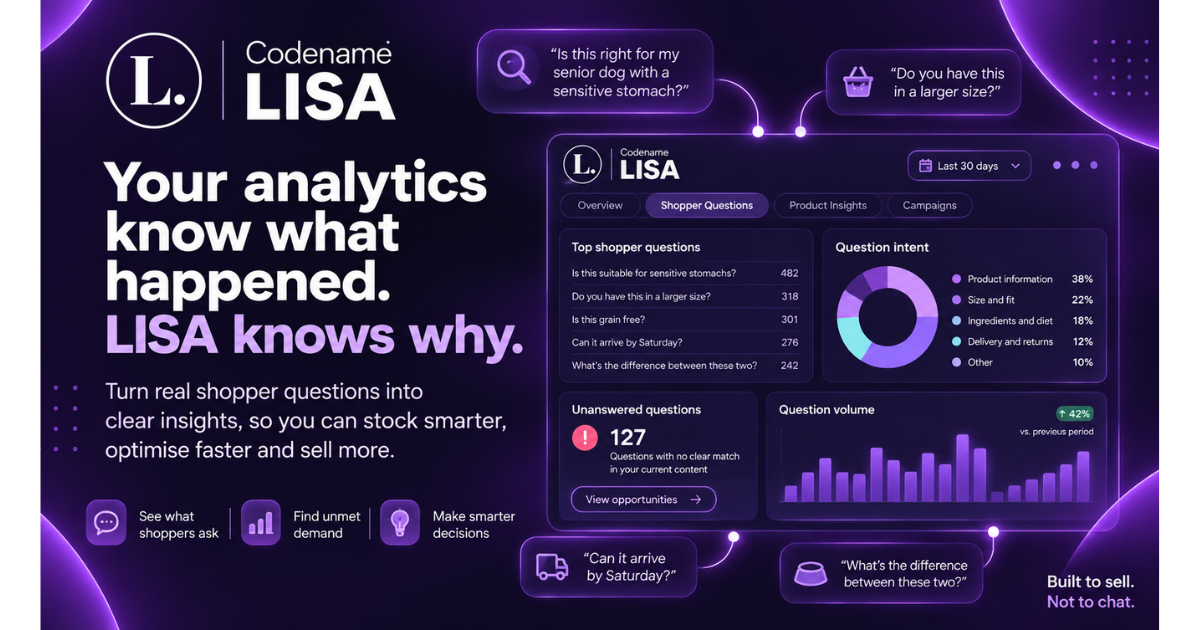
An AI shopping assistant for ecommerce does not just answer questions - it leads shoppers through a discovery process, surfaces the most relevant product for their specific situation, and builds the kind of confidence that converts. It works across every product category, at every hour, without a salary.
The Maths Are Not Complicated
Consider two uses of the same budget:
Option A: Attend a trade show, spend two days networking, collect contacts you may or may not convert, return with a handful of promising leads.
Option B: Deploy an AI shopping assistant on your ecommerce store, improve the guided experience for every shopper who visits, and start converting a higher percentage of your existing traffic - day after day.
Option A has a one-time ceiling. Option B compounds. Every improvement to your store's conversion experience pays dividends on every future visitor.
The Questions Worth Asking Before Your Next Show
None of this means trade shows are always the wrong choice. For sourcing new products or locking in supplier relationships, they can serve a purpose. But before committing budget, ask yourself:
- What is my current store conversion rate? If it is below 2%, your most urgent opportunity is not new product discovery - it is converting visitors you already have.
- How much of my traffic leaves without engaging? A high bounce rate is a signal that your store is not answering the questions shoppers arrive with.
- Could the same budget improve my online experience? In most cases, the answer is yes - and the return is measurable in a way that trade show ROI rarely is.
As we covered in Stop Chasing Traffic, Start Buying Customers, the instinct to always go looking for new audiences often masks a conversion problem that already exists at home.
Standing Out Starts on Your Store
The pet industry is crowded. PATS proves that every year. Hundreds of brands. Thousands of SKUs. Everyone with a premium story and a polished stand. You are not going to out-spend the big players at a trade show. But you can absolutely out-serve them on your own ecommerce store.
The stores that build loyalty and drive repeat purchases are the ones that make shoppers feel understood. They guide. They recommend. They remember what a customer's dog needs and make the next purchase feel effortless. That is not a feature of a well-designed brochure - it is a feature of a well-designed shopping experience.
LISA is built to do exactly that. As an AI shopping assistant for ecommerce, LISA holds intelligent conversations with shoppers, understands their pet's specific needs, recommends the right product, and helps stores convert far more of the visitors they already attract - without adding headcount.
If you want to see what that looks like on your own store, book a demo with the LISA team and discover how personalised shopping experiences can become your most durable competitive advantage - one that works long after any trade show floor has been packed away.